
This post contains affiliate links. If you purchase through our links we may earn a small commission at no extra cost to you.
Table of Contents
- Signs Your Senior Dog Has a Sensitive Stomach
- What to Look For in Dog Food
- Quick Picks
- Our Top 5 Best Dog Foods
- How to Choose Dog Food
- Frequently Asked Questions
- When to See a Vet
- Final Verdict
Finding the best dog food for small senior dogs with sensitive stomachs can feel overwhelming when your dog is dealing with vomiting, loose stools, or discomfort after every meal.
As dogs get older, their digestive systems become more delicate. The food that worked perfectly for years may suddenly cause bloating, gas or stomach upset. Small breeds are especially vulnerable because their digestive tracts are shorter and more sensitive than larger dogs, and their nutritional needs become more specific as they age.
The good news is that choosing the right senior formula can reduce symptoms dramatically — often within just a few weeks. We reviewed dozens of options and narrowed it down to the five best dog foods for small senior dogs with sensitive stomachs in 2026, based on ingredient quality, digestibility, veterinary recommendations and real owner reviews.
Signs Your Senior Dog Has a Sensitive Stomach
Before switching foods, it helps to know what you are dealing with. Here are the most common signs that your small senior dog has a sensitive stomach:
Frequent vomiting after meals — Occasional vomiting can be normal, but regular vomiting after eating suggests the food is too rich, contains an irritating ingredient, or the kibble size is too large for your dog to break down properly.
Loose stools or chronic diarrhea — This is one of the clearest signs of digestive sensitivity. Artificial additives, low quality proteins, excessive fat and sudden diet changes are common triggers.
Excessive gas and bloating — If your dog is unusually gassy or looks uncomfortable after eating, their gut is likely struggling with certain ingredients. Soy, corn and fermentable fillers are frequent culprits.
Loss of appetite — Senior dogs with sensitive stomachs sometimes begin associating mealtimes with discomfort and start refusing food. This is a clear signal that something needs to change.
Weight loss despite eating regularly — If your dog eats well but keeps losing weight, their digestive system may not be absorbing nutrients properly. This is especially common in dogs over ten years old.
Gurgling stomach sounds between meals — Loud digestive noises can indicate gas, gut irritation or inflammation.
If your dog is showing several of these signs consistently, a switch to a gentle senior formula is a sensible first step. If symptoms are severe or have come on suddenly, always speak to your vet before changing their diet.
What to Look For in Dog Food for Small Senior Dogs With Sensitive Stomachs
Not all senior dog foods are created equal. Here is what actually matters when choosing food for a small senior dog with a sensitive stomach:
Easily digestible named proteins — Look for real chicken, turkey or salmon as the first ingredient. Avoid vague labels like “meat meal” or “animal by-products.” According to the American Kennel Club, protein is the most important nutrient for senior dogs. The American Veterinary Medical Association recommends regular checkups for senior pets.
Prebiotics and probiotics — These support healthy gut bacteria, reduce digestive upset and help firm up loose stools over time.
No artificial additives — Artificial colours, flavours and chemical preservatives are common stomach irritants. A clean ingredient list is always better.
Small kibble size — Senior small breeds have smaller mouths, weaker teeth and slower chewing. Smaller kibble means better chewing, less gulping and easier digestion.
Glucosamine and chondroitin — Digestive health and joint health often go hand in hand in senior dogs. Look for formulas that support both.
Balanced fibre — Too little fibre causes loose stools. Too much causes gas. A balanced blend of soluble and insoluble fibre keeps digestion running smoothly.
Quick Picks
- Best Overall: Hill’s Science Diet Small Paws Senior
- Best Budget: Purina Pro Plan Senior Small Breed
- Best for Grain Sensitivity: Merrick Lil Plates Grain Free Senior
- Best for Dogs 12+: Royal Canin Small Aging 12+
- Best Whole Food Formula: Wellness Complete Health Small Breed Senior
- | Hill’s Science Diet | Sensitive Stomach | Chicken & Rice |
- | Royal Canin Small Dog | Senior Dogs | Rice & Lamb |
- | Blue Buffalo Small Breed | Allergies | Chicken & Oats |
Our Top 5 Best Dog Food for Small Senior Dogs With Sensitive Stomachs
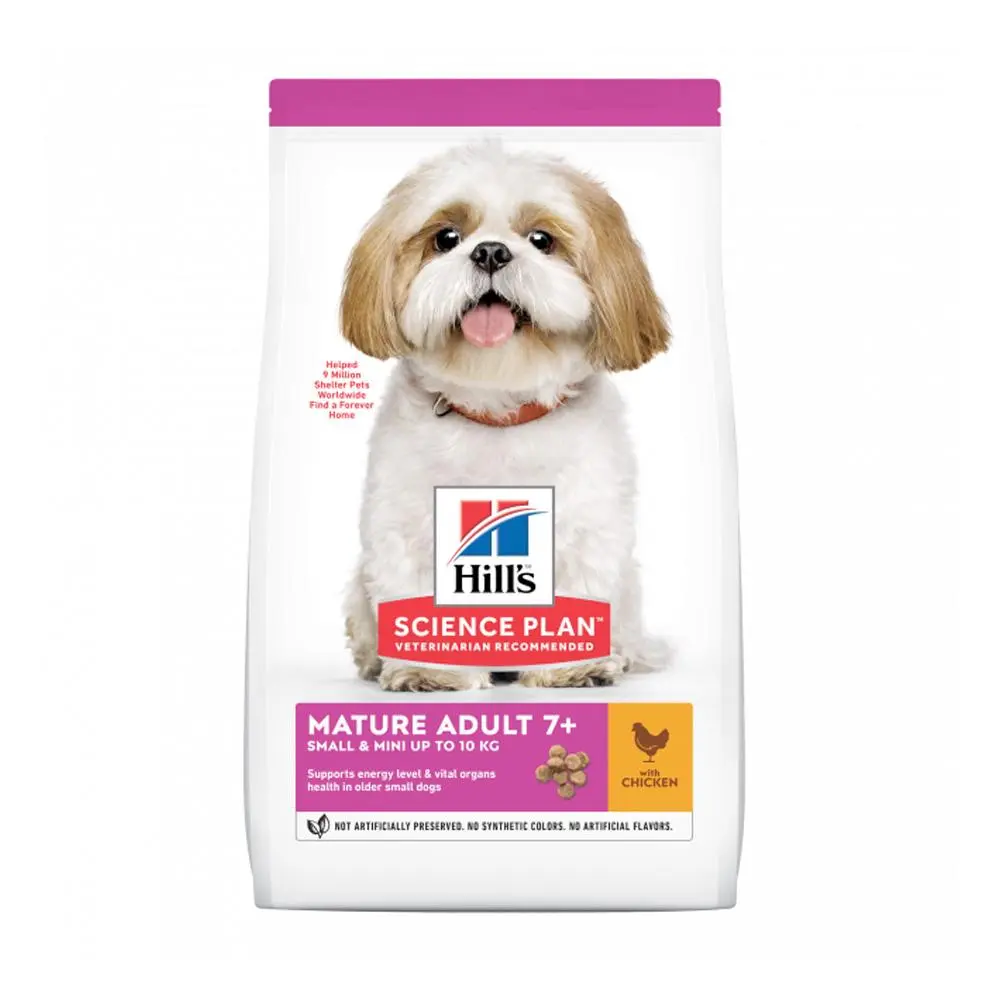
1. Hill’s Science Diet Adult 7+ Small Paws — Best Overall
Hill’s Science Diet has been a trusted name in veterinary nutrition for decades. Their Small Paws Senior formula is developed with input from veterinary nutritionists and recommended by vets worldwide — making it one of the most clinically backed options on this list.
What makes this food stand out for sensitive stomachs is its carefully balanced natural fibre blend. Rather than relying on cheap fillers, Hill’s uses prebiotic fibres that feed beneficial gut bacteria and promote firm, consistent stools. The kibble is sized specifically for small mouths, which means less gulping, better chewing and easier digestion overall.
The omega-6 fatty acids support healthy skin and coat while also reducing internal inflammation that can aggravate digestive issues. If your senior dog has been scratching, shedding excessively or dealing with a dull coat alongside stomach problems, this formula addresses both at once.
Key Features:
- Chicken meal as first ingredient
- Natural fibre blend for healthy digestion
- Omega-6 fatty acids for skin and coat
- Small kibble designed for small mouths
- No artificial colours or preservatives
Pros: Widely vet-recommended, proven long-term formula, easy to find in stores and online Cons: More expensive than budget options
2. Purina Pro Plan Senior Small Breed — Best Budget
Purina Pro Plan sits in the sweet spot between premium nutrition and accessible pricing. It is one of the most popular choices among dog owners whose senior small breeds need digestive support without a premium price tag.
What sets this formula apart is its live probiotics — guaranteed amounts of beneficial bacteria that survive the manufacturing process and reach your dog’s gut intact. Many foods claim probiotic benefits but fail to deliver viable cultures by the time they reach your dog’s bowl. Purina Pro Plan is transparent about their probiotic counts, which is reassuring when you are managing chronic digestive issues.
Real chicken as the first ingredient provides high quality protein to maintain lean muscle mass — important for small senior dogs who tend to lose muscle tone with age. Add in glucosamine for joints and antioxidants for immune health, and this is a well-rounded formula at a price that works for most budgets.
Key Features:
- Real chicken as first ingredient
- Live probiotics for digestive and immune health
- Antioxidants for immune support
- Glucosamine for joint health
- Small bite size kibble
Pros: Excellent value, live probiotics, great palatability — even picky seniors tend to love it Cons: Contains corn, which some sensitive dogs may react to
3. Royal Canin Small Aging 12+ — Best for Dogs 12 and Older
Royal Canin takes a science-first approach to pet nutrition, and their Small Aging 12+ formula reflects years of research into the specific needs of very small, very senior dogs. This food is designed for dogs over twelve years old — an age group that is often underserved by general senior formulas.
The digestibility of this food is exceptional. Royal Canin uses highly digestible proteins that place minimal strain on aging digestive systems, along with an adapted fibre profile that supports both healthy digestion and regular stools. The calorie content is carefully balanced for the lower activity levels typical of dogs in their final years, reducing the risk of weight gain that stresses joints and the heart.
The inclusion of EPA and DHA — omega-3 fatty acids — supports aging brain function, which is a genuine concern in senior dogs. Cognitive decline is real in older dogs, and nutritional support during the senior years can help maintain mental sharpness for longer.
Key Features:
- Highly digestible proteins
- EPA and DHA for aging brain health
- Antioxidant complex with Vitamin E
- Adapted fibre content
- Tiny kibble for small aging teeth
Pros: Extremely precise senior nutrition, ideal for dogs 12 and older, highly digestible Cons: Premium price, only suitable for very small breeds
4. Merrick Lil Plates Grain Free Senior — Best for Grain Sensitivity
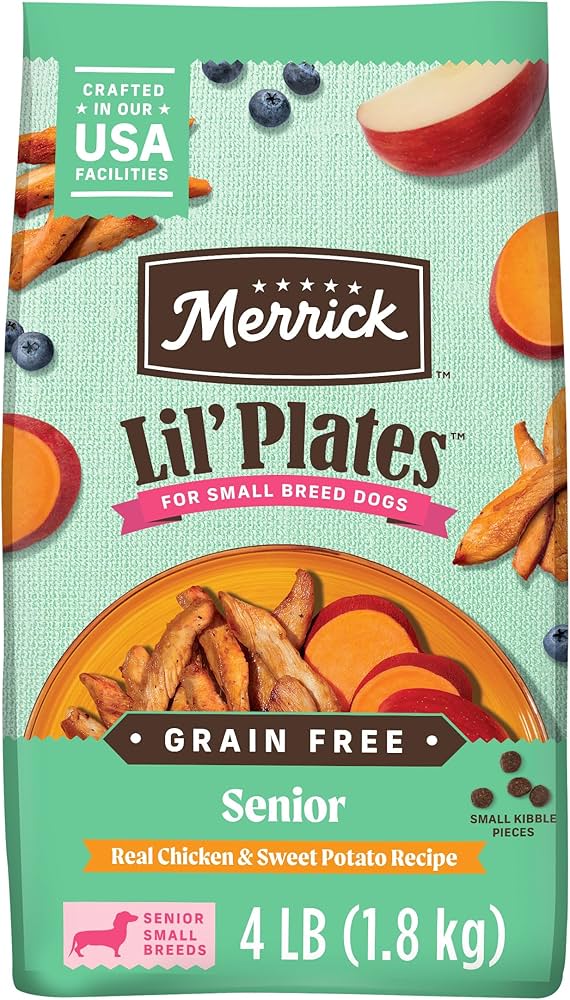
For small senior dogs who react specifically to grains — whether wheat, corn or rice — Merrick Lil Plates Grain Free Senior is the standout choice. Grain sensitivities can show up as digestive upset, skin irritation or chronic ear infections, and removing grains from the diet often brings noticeable relief within a few weeks.
Merrick uses deboned chicken or salmon as the first ingredient, providing a high quality, easily digestible protein without relying on meat meals or by-products. Added probiotics support gut health during the transition to grain free eating, which can otherwise temporarily disrupt digestion as your dog’s gut bacteria adjust.
Made in the USA with carefully sourced ingredients, this formula avoids the artificial additives that commonly trigger sensitive stomach reactions in small breeds.
Key Features:
- Deboned chicken or salmon as first ingredient
- Grain free formula
- Probiotics for digestive health
- Omega fatty acids for coat health
- Made in the USA
Pros: Ideal for grain sensitivities, high quality whole food ingredients, excellent coat benefits Cons: Higher price point, some dogs need extra adjustment time
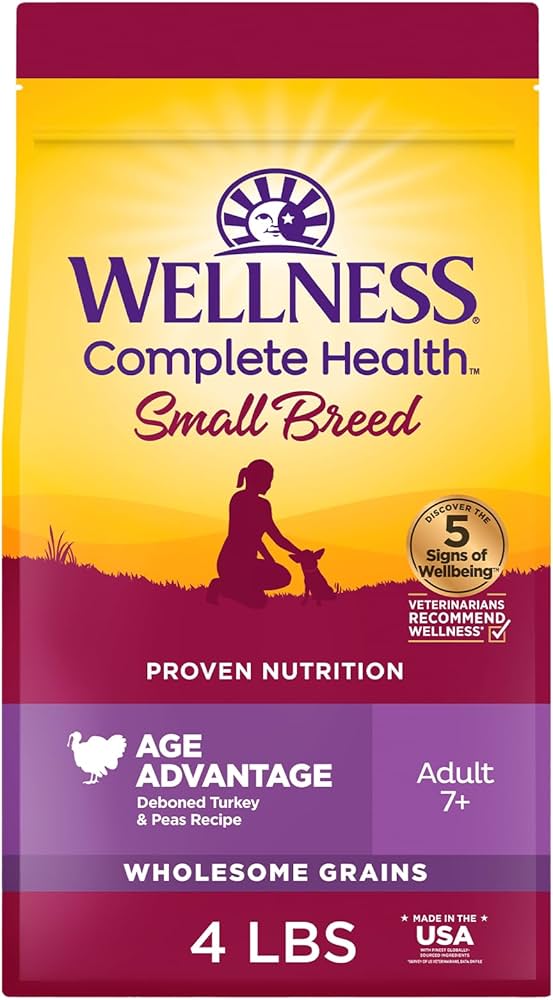
5. Wellness Complete Health Small Breed Senior — Best Whole Food Formula
Wellness Complete Health takes a whole food philosophy to pet nutrition — the belief that recognisable, minimally processed ingredients are easier for the body to digest and absorb. For sensitive-stomached senior dogs, this approach can make a real difference.
This formula is completely free from artificial preservatives, colours and flavours. Instead it relies on natural antioxidants from real fruits and vegetables like blueberries, spinach and sweet potatoes — ingredients that also provide dietary fibre to support healthy digestion and naturally feed beneficial gut bacteria.
The addition of taurine sets this food apart. Taurine is an amino acid that supports heart health — a genuine concern for small breed senior dogs, who are more prone to certain cardiac conditions as they age. Combined with glucosamine and chondroitin for joints, this formula looks after the whole dog, not just their stomach.
Key Features:
- Deboned chicken as first ingredient
- No artificial preservatives, colours or flavours
- Taurine for heart health
- Glucosamine and chondroitin for joints
- Antioxidants from real fruits and vegetables
Pros: Clean ingredients, heart health support, excellent for long-term sensitive stomach management Cons: Some picky dogs find the flavour less appealing than meat-forward formulas
How to choose dog food for small senior dogs with sensitive stomachs
We evaluated each product based on ingredient quality, nutritional completeness, digestibility, veterinary recommendations, manufacturing standards and thousands of real owner reviews from people managing senior small breeds with sensitive stomachs. Every product on this list has a proven track record with aging dogs.
Frequently Asked Questions
How often should I feed my small senior dog? Most senior small dogs do best with two small meals per day rather than one large meal. Smaller, more frequent meals are easier on an aging digestive system and help maintain stable blood sugar levels throughout the day.
Should I switch my senior dog to wet food? If your dog has dental issues or a very sensitive stomach, mixing wet and dry food can help. Wet food is easier to chew, higher in moisture and often easier to digest. A 50/50 mix is a good starting point for dogs who struggle with dry kibble alone.
How do I transition my dog to a new food? Always transition slowly over 7 to 10 days. Start with 25% new food mixed into 75% of the old food. Every two to three days, increase the proportion of new food. A slow transition reduces the risk of digestive upset during the switch.
What ingredients should I avoid for dogs with sensitive stomachs? Avoid artificial colours, flavours and chemical preservatives. Steer clear of excessive fillers like corn syrup, generic meat meals and common allergens like soy and wheat. The simpler and more recognisable the ingredient list, the better for a sensitive stomach.
Is grain free food better for senior dogs with sensitive stomachs? Not necessarily. Grain free is the right choice if your dog has a confirmed grain sensitivity or allergy. For dogs without grain issues, a high quality formula with wholesome grains like brown rice or oatmeal can be equally digestible and nutritious. Always base the decision on your dog’s specific reactions rather than trends.
When to See a Vet: The American Veterinary Medical Association recommends annual wellness visits for all senior dogs.
Switching to a better food solves digestive issues for many senior small dogs — but not always. Take your dog to the vet if you notice any of the following:
Blood in vomit or dark, tar-like stools — This can indicate internal bleeding and needs immediate attention.
Rapid, unexplained weight loss — This goes beyond dietary sensitivity and may indicate kidney disease, diabetes, cancer or thyroid issues.
Complete loss of appetite for more than 24–48 hours — Especially if combined with lethargy or unusual behaviour.
Diarrhea lasting more than 48 hours — Prolonged diarrhea causes dangerous dehydration in small dogs very quickly.
Visible abdominal pain or a swollen, hard belly — Seek emergency veterinary care immediately.
No improvement after 4–6 weeks on a new food — An underlying condition like inflammatory bowel disease, pancreatitis or a food allergy may need to be properly diagnosed.
Your vet may recommend bloodwork, an elimination diet or an ultrasound to get to the root of persistent symptoms. Diet is a powerful tool — but it works best alongside proper veterinary care.
Final Verdict
For most small senior dogs with sensitive stomachs, Hill’s Science Diet Small Paws Senior is our top recommendation. It is vet-backed, widely available and delivers reliable digestive support backed by real nutritional science.
If budget is a concern, Purina Pro Plan Senior Small Breed offers outstanding quality at a lower price and is one of the few foods that includes live, viable probiotics.
For dogs with grain sensitivities, Merrick Lil Plates Grain Free Senior is our top pick — clean ingredients, real meat first and no grains that could be triggering your dog’s symptoms.
Every dog is different. If your senior dog has severe or persistent digestive issues, always work with your veterinarian to find the right solution work with your veterinarian and check our guide to [Best Joint Supplements for Senior Small Dogs](https://petsuppliesjournal.com/best-joint-supplements-senior-small-dogs/) to support their health.The love and attention you are putting into their nutrition already makes a difference — even when it does not feel like it.